West Fork Trail Sedona – A Magical Hike with History
The West Fork Trail Sedona might be calling your name if you are dreaming of a hike that has red rocks, a shady forest, a babbling creek, towering canyon walls, and considerably less baking on an exposed slab of sandstone.
Located in Oak Creek Canyon about 10 miles north of Sedona, West Fork Trail #108 feels like you've wandered into a completely different part of Arizona.
Instead of climbing toward a summit, you're heading deeper into a canyon. Trees grow overhead, Oak Creek winds alongside you, and enormous sandstone walls rise on both sides.
And then there are the creek crossings.
Lots of them.
At first, they're fun.
Then you'll find yourself standing on the bank staring intensely at a collection of rocks while trying to decide whether you're coordinated enough to make it across without soaking a shoe.
Spoiler: eventually, you might get wet.
That's part of West Fork.
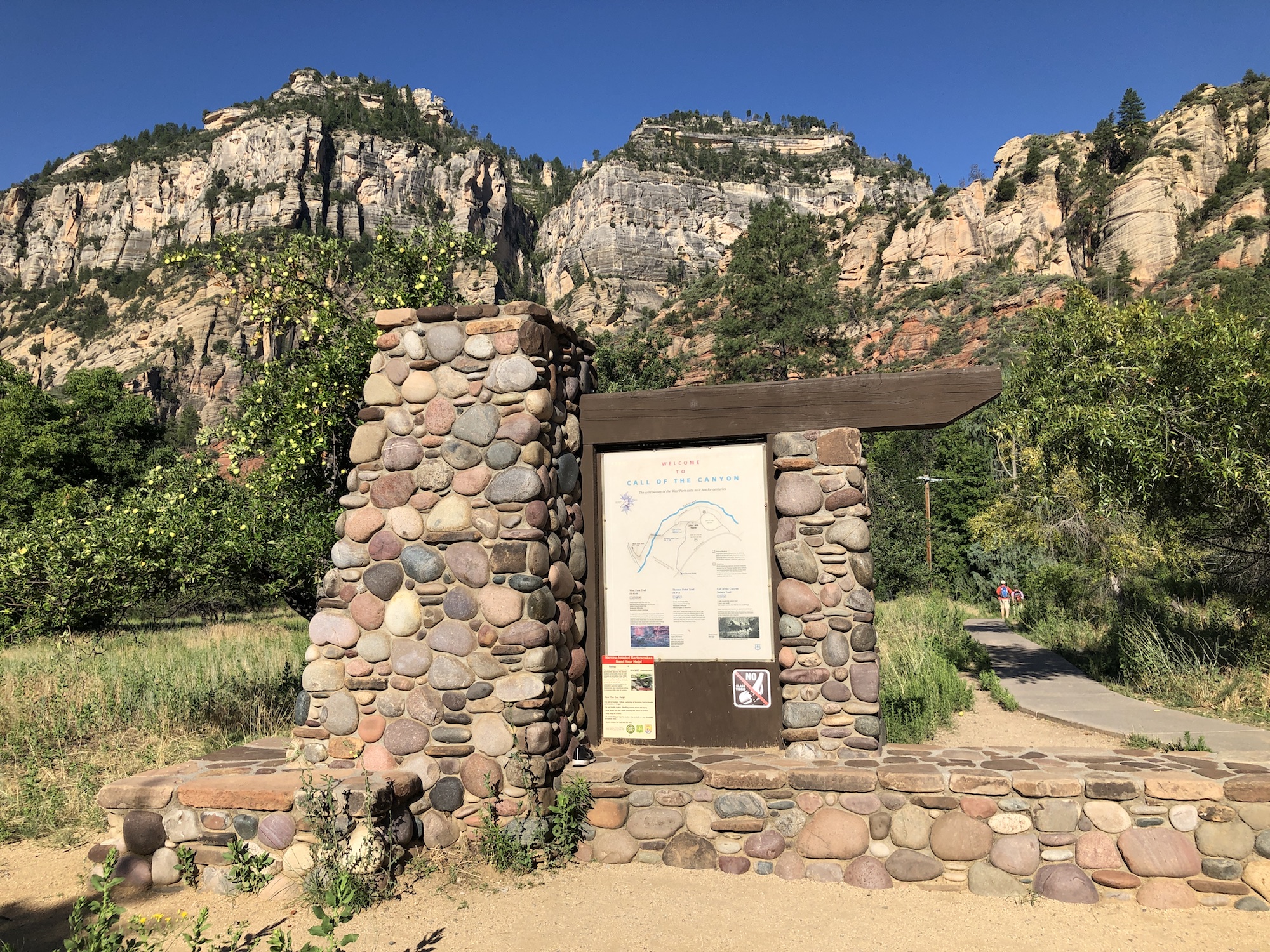
West Fork Trail at a Glance
Trail: West Fork of Oak Creek Trail #108
Location: Oak Creek Canyon, north of Sedona
Trailhead: Call of the Canyon Day Use Area
Type: Out and back
Difficulty: Easy to moderate along the maintained section
Scenery: Oak Creek, red-rock canyon walls, forest and historic ruins
Best seasons: Spring through fall, with incredible autumn color
Shade: Lots by Sedona standards
Creek crossings: Oh yes
Popularity: Very high — get there early!
The maintained trail travels roughly three miles into West Fork Canyon before things get considerably more adventurous.
Beyond that point, you're no longer talking about the same casual creekside hike. The Forest Service warns that there is no clear trail beyond approximately three miles, so know where you're going before continuing deeper into the canyon.
The Adventure Starts Before the Hike
The drive to West Fork Trail Sedona is almost worth getting out of bed early for by itself.
From Sedona, follow Highway 89A north into Oak Creek Canyon. The highway winds beneath towering canyon walls, alongside Oak Creek and through one of my favorite stretches of road in the Sedona area.
The West Fork trailhead is at the Call of the Canyon Day Use Area near milepost 384.7.
And here's the part you really need to know:
West Fork Trail Sedona is popular.
Really popular.
The kind of popular where arriving at 10 a.m. on a gorgeous Saturday and expecting an empty parking space might be a little optimistic.
Parking is limited, especially on weekends and during fall color season. An early start gives you cooler temperatures, beautiful morning light and a much better chance of avoiding the Sedona Trailhead Parking Olympics.
First Stop: A Little West Fork History
You don't have to hike very far before West Fork gives you something interesting to explore.
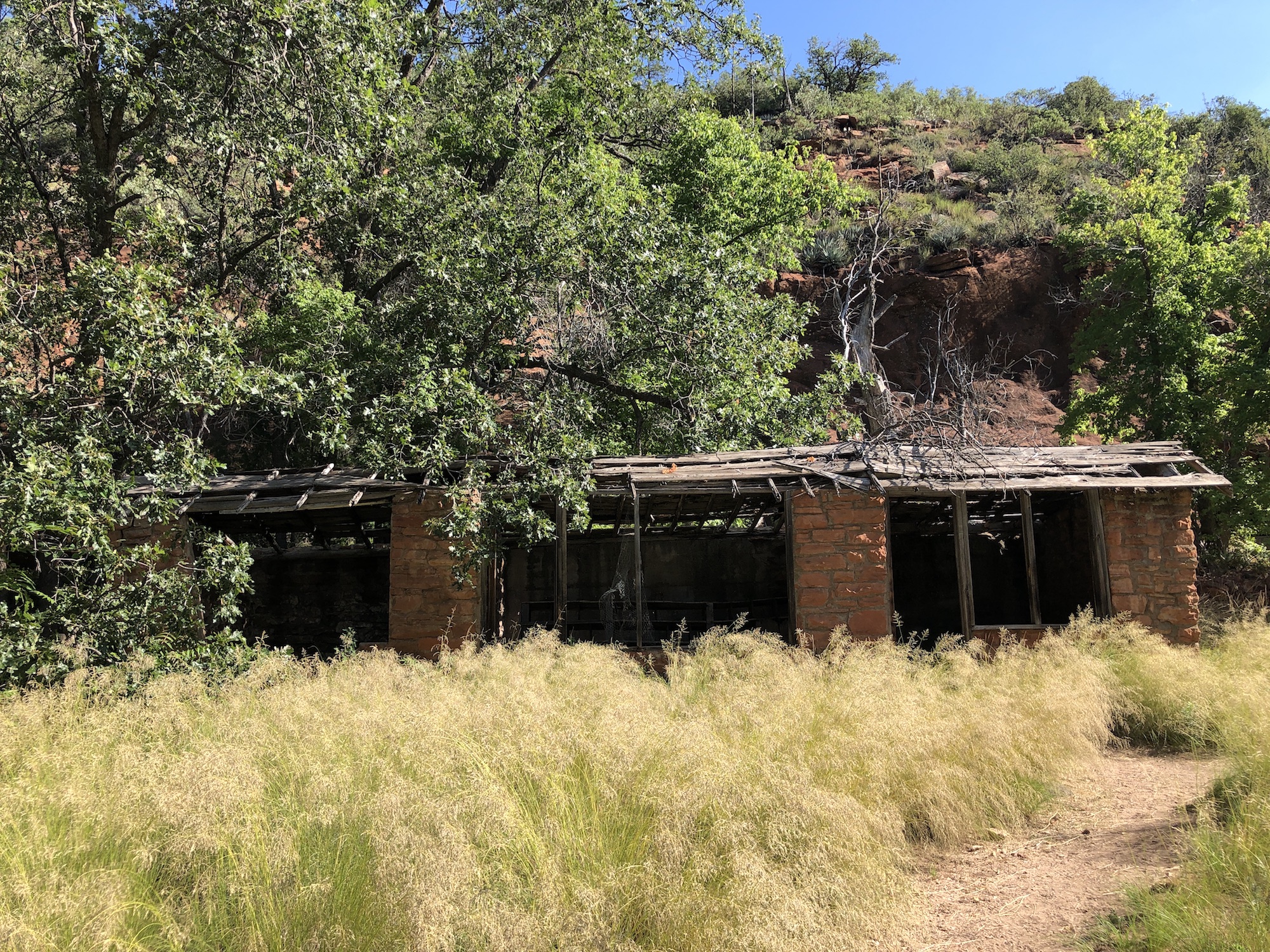
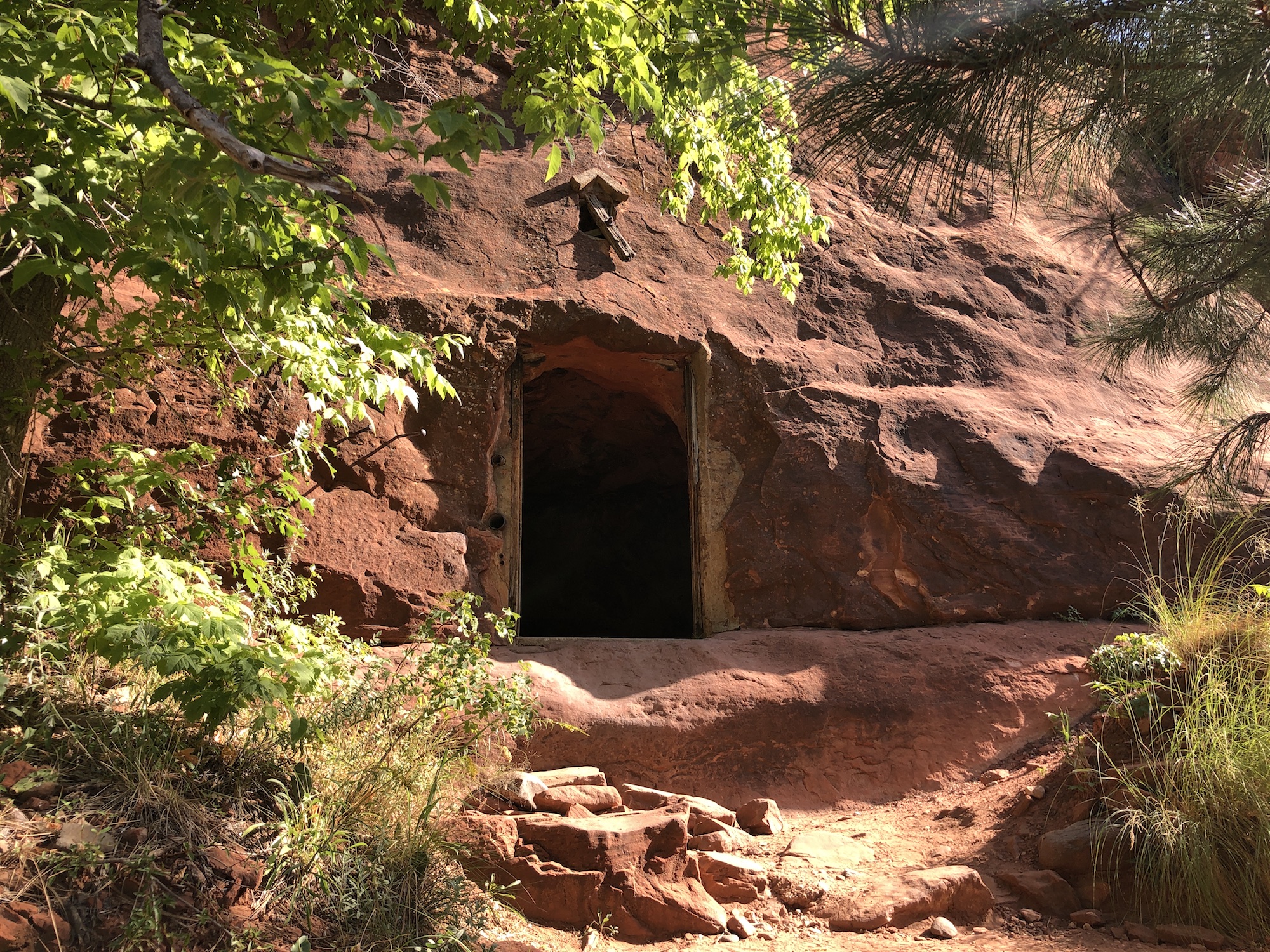
Shortly after leaving the parking area, you'll cross Oak Creek on an iron footbridge and pass the remains of historic Mayhew Lodge.
The property has a fascinating past. A cabin on the site eventually became part of a hunting and fishing lodge, and the area is connected to author Zane Grey and his novel The Call of the Canyon. Mayhew Lodge later welcomed some rather famous visitors, including Herbert Hoover, Clark Gable, Jimmy Stewart, Walt Disney and Maureen O'Hara.
The Forest Service eventually acquired the property, and the lodge burned in 1980.
So before you've even gotten serious about hiking, you've already walked through a little piece of Oak Creek Canyon history.
Then it's time to head into the canyon.
And This Is Where West Fork Trail Sedona Starts Showing Off
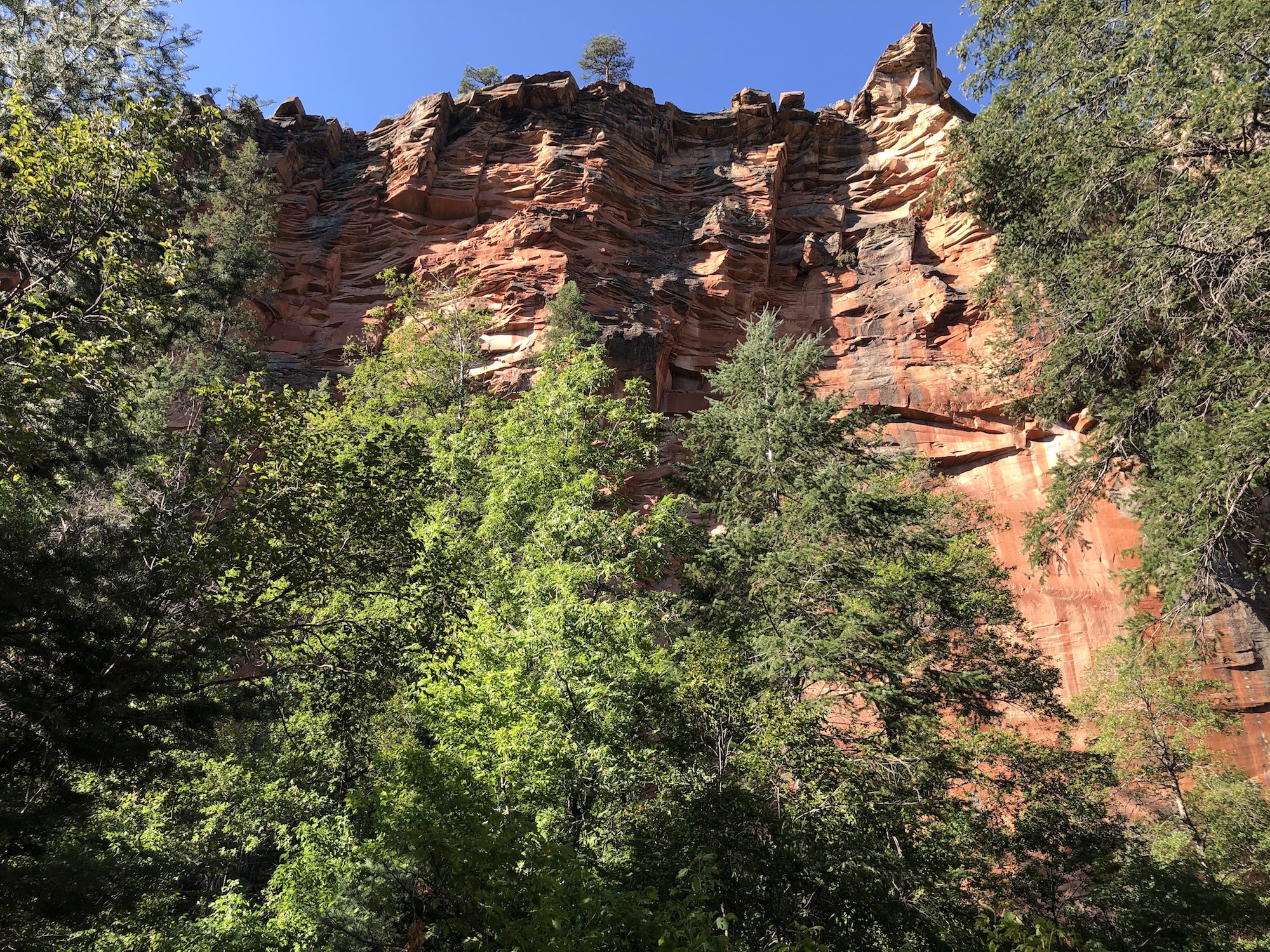
Once you enter the mouth of West Fork Canyon, everything changes.
The canyon walls get taller.
The trees close in.
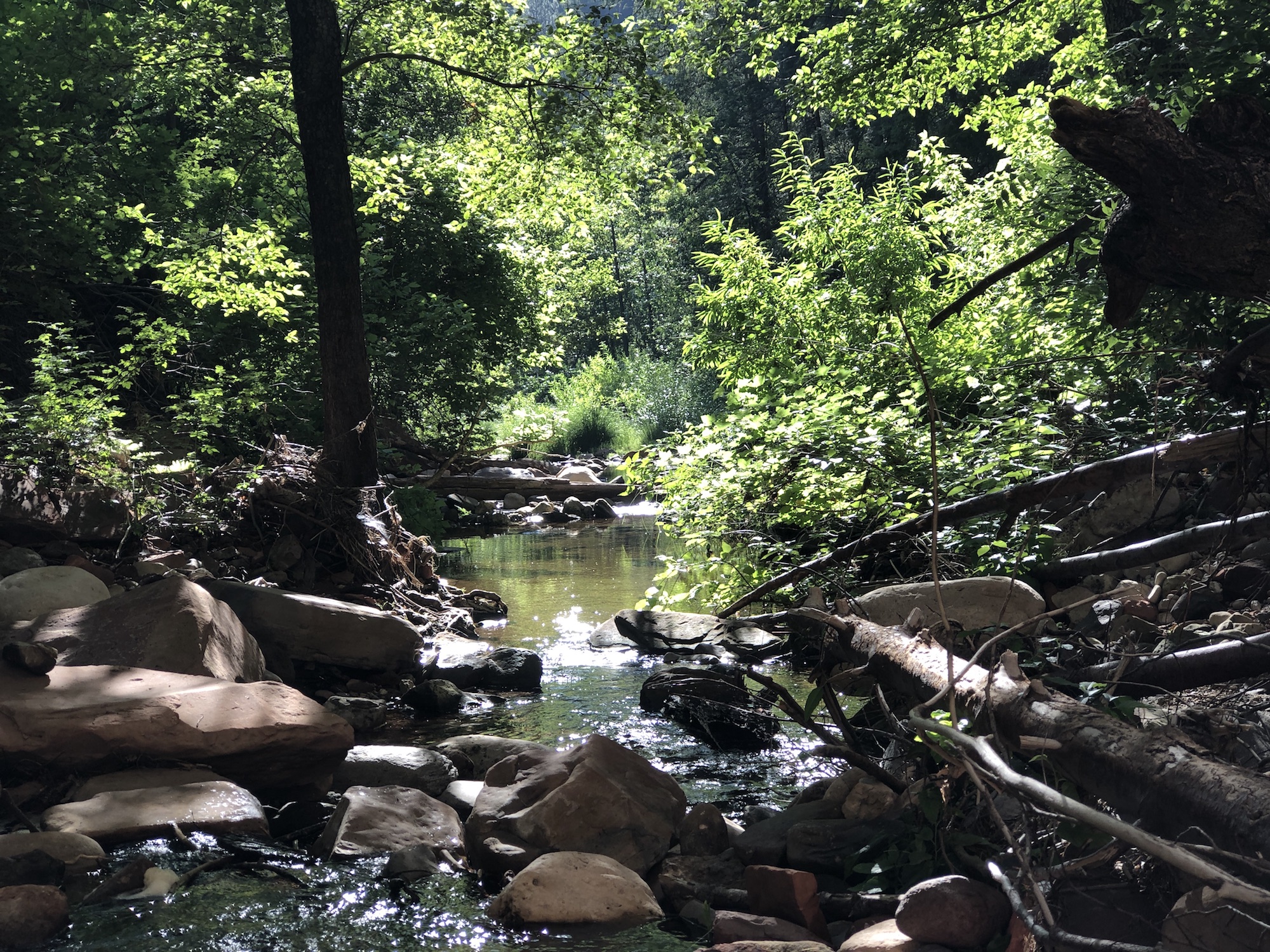
The creek starts twisting back and forth across the canyon floor.
Sunlight slips through the leaves and dances across the water.
And somewhere along the way, you stop wondering how many miles you've walked.
You're too busy looking around.
That's West Fork.
If your hiking goal is to conquer a summit, scramble up a giant red-rock formation or stand on top of something dramatic, there are plenty of Sedona trails for that.
West Fork isn't really about conquering anything.
The canyon itself is the destination.
And the farther you walk into it, the better it gets.
About Those Creek Crossings...
Let's talk about the part everyone remembers.
West Fork crosses the creek repeatedly as you make your way into the canyon.
Sometimes there's an obvious line of rocks.
Sometimes there's a conveniently placed log.
Sometimes there's absolutely no obvious solution and you'll stand there staring at the creek like you're planning a small military operation.
That rock looks stable.
I could step there.
Then jump to that one.
Probably.
You may make it across perfectly.
You may perform a surprisingly graceful little hop.
Or you may put one foot directly into Oak Creek.
It happens.
Water levels change with the seasons and recent weather, so every visit can be a little different. Shoes with decent traction are a good idea, and trekking poles can be extremely helpful.
My personal rule?
Don't wear shoes that will ruin your entire day if they get wet.
Problem solved.
Why West Fork Feels So Different From Other Sedona Hikes
Sedona is famous for BIG scenery.
Cathedral Rock.
Bell Rock.
Courthouse Butte.
Huge skies and endless layers of red sandstone.
West Fork gives you something completely different.
Instead of looking out over the landscape, you're walking into it.
The farther you hike, the more the canyon seems to wrap around you. Highway 89A disappears. The outside world gets quieter. Trees and canyon walls take over.
In some places, the creek becomes almost mirror-like. In others, enormous sandstone cliffs rise straight above the water.
And then there's the shade.
Glorious, wonderful shade.
Anyone who has hiked an exposed Sedona trail under the Arizona sun knows just how exciting that word can be.
That doesn't mean West Fork is automatically cool or safe during summer. Oak Creek Canyon can still get hot, so bring plenty of water and always check current weather conditions.
Fall at West Fork Is Something Else
If West Fork Trail Sedona has a superstar season, it's fall.
The canyon's deciduous trees turn yellow, orange and red, creating a completely different landscape from the desert scenery surrounding Sedona.
Add the creek, red canyon walls and colorful leaves reflecting in the water and...
Well.
There's a reason photographers show up.
It's gorgeous.
It's ridiculously photogenic.
And you definitely won't be the only person who knows about it.
If you're planning a West Fork hike during peak fall color, set the alarm early and expect company.
Spring brings its own personality, including migrating songbirds, while winter can bring snow and icicles into the canyon.
That's one of the things I love about West Fork.
You can hike the same trail several times and never have quite the same hike.
You Don't Have to Hike the Whole Thing
This may be one of West Fork's best features.
You don't have to hike all the way to the end of the maintained trail to feel like you've had a great adventure.
The scenery starts almost immediately.
Want to walk for an hour, play around near the creek and take approximately 147 photos?
Perfect.
Turn around whenever you're ready.
Want to spend several hours exploring deeper into the canyon?
Keep going.
That makes West Fork a great choice when people in your group have different hiking abilities—or when you're simply in the mood for a hike without worrying about reaching a particular destination.
Just remember one important mathematical fact:
Every mile you happily wander into the canyon is another mile you have to walk back.
Unfortunately, West Fork has not yet installed a return shuttle.
What Should You Bring?
I'd keep it simple.
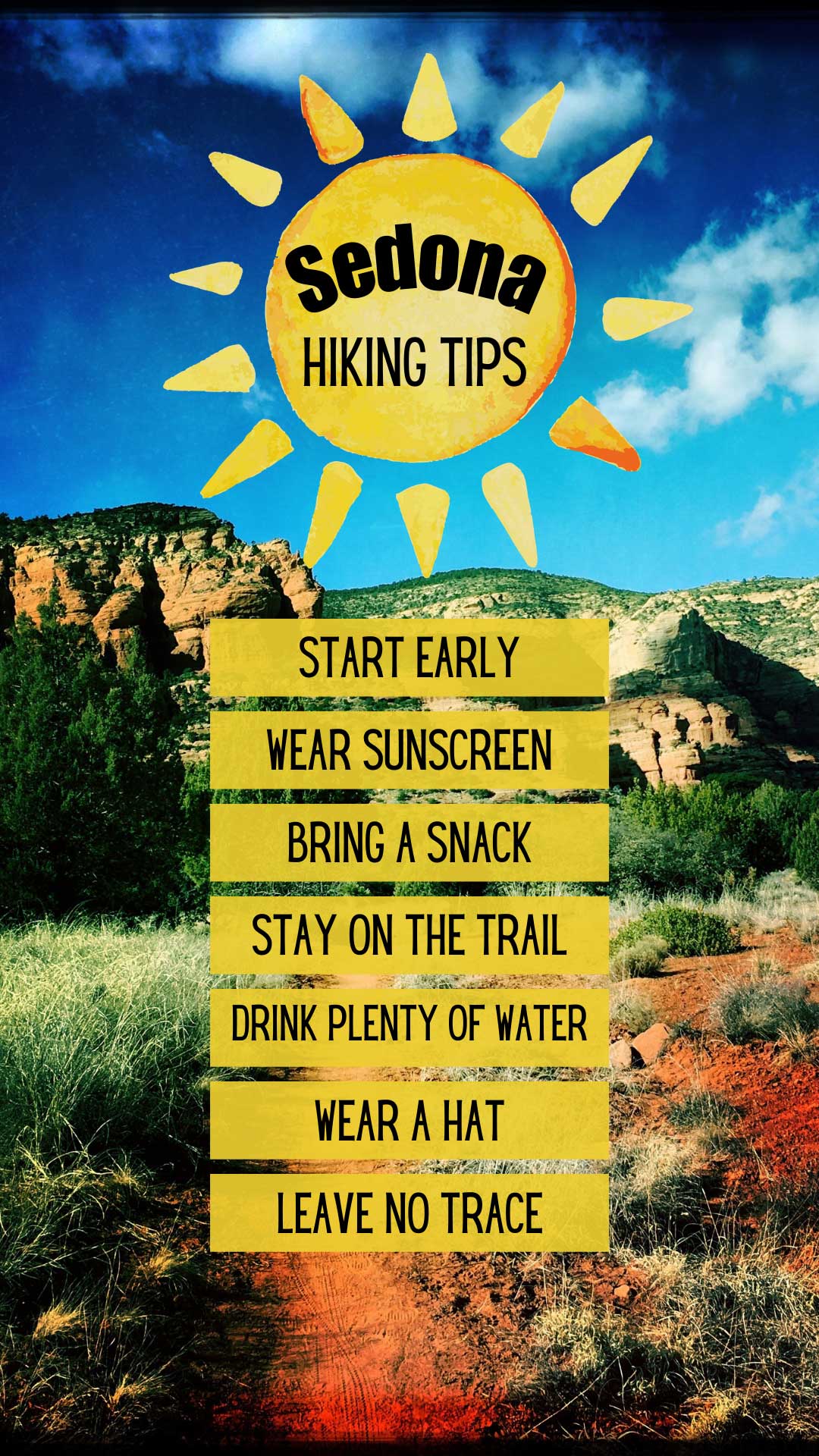
Bring plenty of water, snacks, shoes with good traction, sun protection and a light layer if temperatures are cool.
Trekking poles can be especially useful if you're not confident with creek crossings.
And you'll probably want your camera or phone.
Actually, forget I said that.
You'll figure that part out approximately five minutes after leaving the parking lot.
A Few Important West Fork Safety Notes
West Fork Trail Sedona follows a creek through a narrow canyon, so weather matters here.
A lot.
Check current conditions before hiking, especially during Arizona's summer monsoon season. Narrow canyons and flash floods are not a combination to mess around with.
It's also important to understand the difference between hiking the popular maintained section and continuing far beyond it.
The Forest Service states that there is no clear trail beyond approximately three miles from Highway 89A. Traveling through the complete West Fork canyon is an entirely different adventure and can involve cold, deep pools, swimming and serious backcountry preparation.
In other words:
If you suddenly find yourself swimming, you've graduated from the casual version of West Fork.
Know where you're going before you get to that point.
Why West Fork Belongs on Your Sedona Hiking List
West Fork doesn't give you Sedona's biggest summit.
You won't have to scramble to the top of a massive red-rock formation.
And you don't have to suffer through a brutal climb before you're rewarded with something beautiful.
West Fork gives you something else.
Permission to slow down.
Walk beside the water.
Listen to the creek.
Look up at the canyon walls.
Stop for photos.
Sit on a rock.
Watch sunlight move through the trees.
And spend an unreasonable amount of time debating which rock you're going to step on next.
There's something refreshing about a trail where reaching the end isn't necessarily the point.
Sometimes the best hike is simply the one that makes you curious about what's around the next bend.
West Fork is that kind of trail.
Before You Go
Trail conditions, parking rules, fees, weather and creek levels can change, so check current information with the Coconino National Forest before heading out.
The Call of the Canyon/West Fork area is a developed recreation site with its own fee and pass rules, so don't automatically assume your usual Red Rock Pass covers everything.
And if you're visiting during peak fall color?
Set the alarm.
Grab some coffee.
Get moving.
West Fork is worth getting up early for.





Hi there! I’m Tamara! Red Rock & Relax is my little corner of the internet dedicated to sharing the best of Sedona. So, lace up your boots, pack your favorite trail snack, and let’s explore the wonder of Sedona together.
HOME | ABOUT | CONTACT | PRIVACY POLICY
Copyright © 2026 ● All Rights Reserved ● RedRockandRelax.com